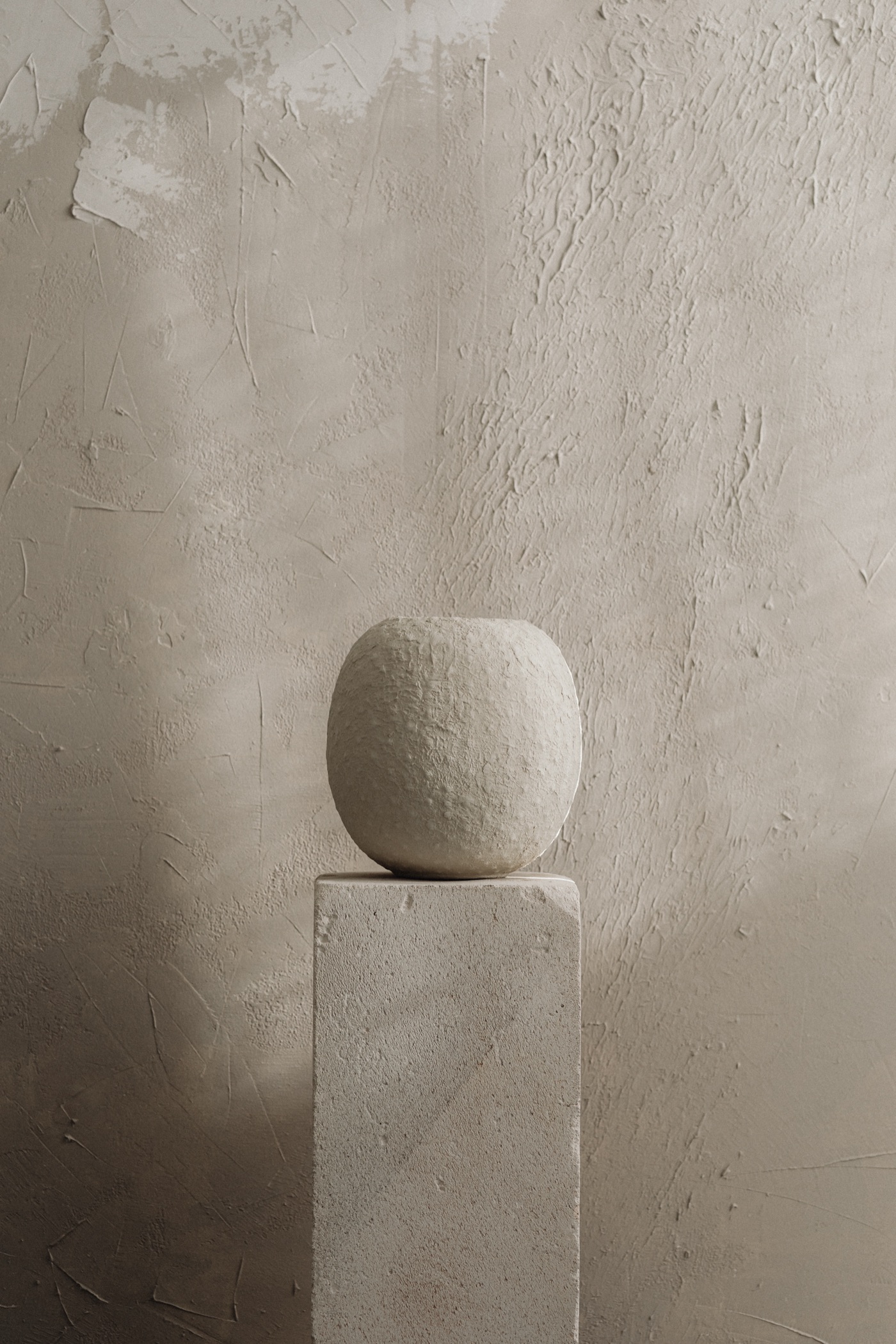
Paint covers a wall. Limewash becomes part of it. Brushed on in thin, cross-hatched coats, it soaks into plaster and dries with a soft, cloudy movement that no roller can reproduce. In the morning it reads almost white; by late afternoon it holds the colour of the sky outside.
We specify it for one reason above all: it gives light something to land on. Flat paint returns light evenly. Limewash scatters it, so a single window can fill a room with gentle variation.
Where we use it
- Entries and stairwells, where the movement reads as you pass.
- Bedrooms, in warm whites with a drop of ochre.
- Rooms with strong sun — the texture softens harsh shadows.
A wall should look different at nine in the morning than it does at six in the evening.
Choose your tone in the room, not from a swatch. Lime is mineral and alkaline; it dries several shades lighter than it goes on, and it keeps shifting as it cures. We always brush a large sample board and live with it for a few days before committing.
Finally, accept the variation. The clouding is the point. If you want perfect uniformity, choose a good matte paint. If you want a wall that breathes, choose lime.